How an AI Receptionist Handles Reservations and Enquiries So Your Restaurant Never Misses a Booking
Losing bookings every time your phone rings during the dinner rush? Here's how to fix it without hiring more staff.
 · 9 min read

Estimated reading time: 7 minutes
Key Takeaways

- A large proportion of restaurant calls go unanswered during peak hours — that's direct revenue walking out the door.
- AI receptionist systems can achieve significantly higher call answer rates than front-of-house staff alone during busy service.
- Automated confirmation and reminder messages can meaningfully reduce no-shows at your restaurant.
- The most practical use case is overflow and after-hours coverage, not replacing your front-of-house team.
- Pricing models vary — per-minute, per-location, or add-on to a phone plan — so the real cost depends on your call volume.
Table of Contents

- The Real Cost of Missed Calls in a Restaurant
- How an AI Receptionist Actually Handles Restaurant Calls
- The AI Receptionist Tools Worth Looking At
- Common Mistakes Restaurant Owners Make When Setting This Up
- How to Get Your AI Receptionist Live Without Disrupting Your Team
The Real Cost of Missed Calls in a Restaurant

Think about what happens between 7 and 9 on a Friday evening in your restaurant. Your front-of-house team is managing tables, taking orders and dealing with walk-ins. The phone rings. Nobody picks up. That was probably a booking request — or a group enquiry worth several covers. It happens again at 8:15. And again at 9:40, when your team is in the weeds with the last seating.
This is not a staffing failure. It's a structural problem. During busy service periods, a significant share of inbound calls go unanswered. You're not losing bookings because your staff are bad at their jobs — you're losing them because it's physically impossible to answer the phone, run the floor and seat guests at the same time.
The result is straightforward: fewer covers, more empty tables, and revenue that never shows up in your till. And because most people who can't get through simply call the next restaurant on the list, you often don't even know you lost them.
An AI receptionist for restaurants is a voice or chat system that answers incoming calls and messages automatically, captures reservation details, and handles standard enquiries — without putting a customer on hold or letting them go to voicemail. It's not a chatbot that says "please leave a message." It's a system that actually takes the booking.
How an AI Receptionist Actually Handles Restaurant Calls
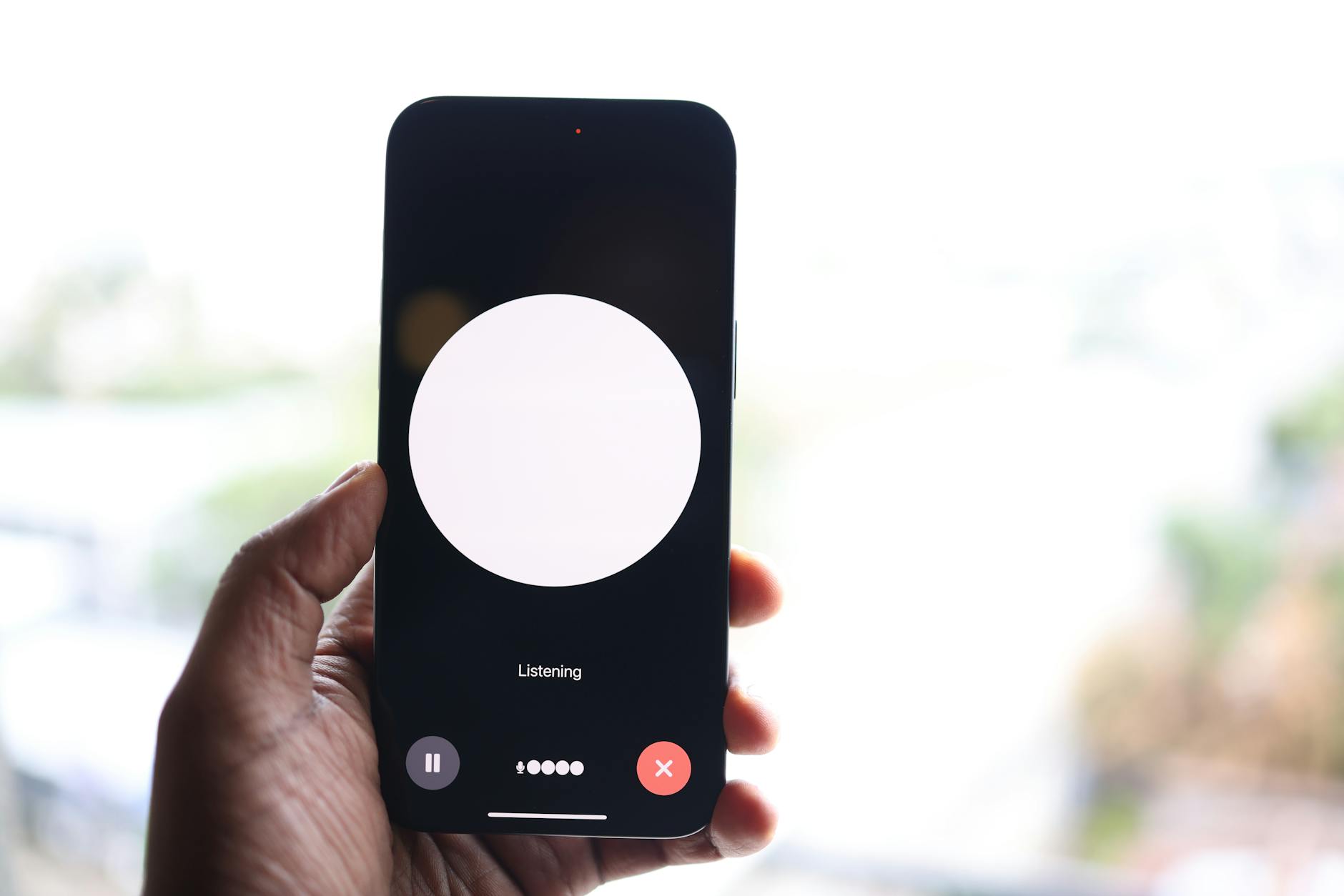
The mechanics are simpler than they sound. When a customer calls your restaurant number, the AI answers immediately — in your name, in your tone, with accurate information about your opening hours, menus and availability. It asks the right questions: date, time, number of guests, any dietary requirements. It checks against your reservation system in real time and either confirms the booking or offers alternatives if that slot is full.
After the call, it sends a confirmation automatically — SMS, email, or both. A reminder goes out 24 to 48 hours before the reservation. That follow-up step alone is significant: automated confirmations and reminders consistently reduce no-shows by cutting through the simple problem of guests forgetting they made a booking.
Beyond reservations, a well-configured AI receptionist can handle the standard questions that eat into your team's time every day:
- What time do you open on Sundays?
- Do you have a private dining room?
- Is there parking nearby?
- Can you accommodate a wheelchair user?
- What's your cancellation policy?
None of those questions require a human. When the AI answers them accurately and quickly, your staff can focus on the customers who are already in the building.
The measurable difference is real. Restaurants that deploy AI answering systems report a materially higher call answer rate compared to relying on human staff during peak service. The gap represents the proportion of your incoming calls that currently slip through. On a busy Friday with 30 inbound calls, even a modest improvement in answer rate can mean several additional bookings captured per service.
The AI Receptionist Tools Worth Looking At
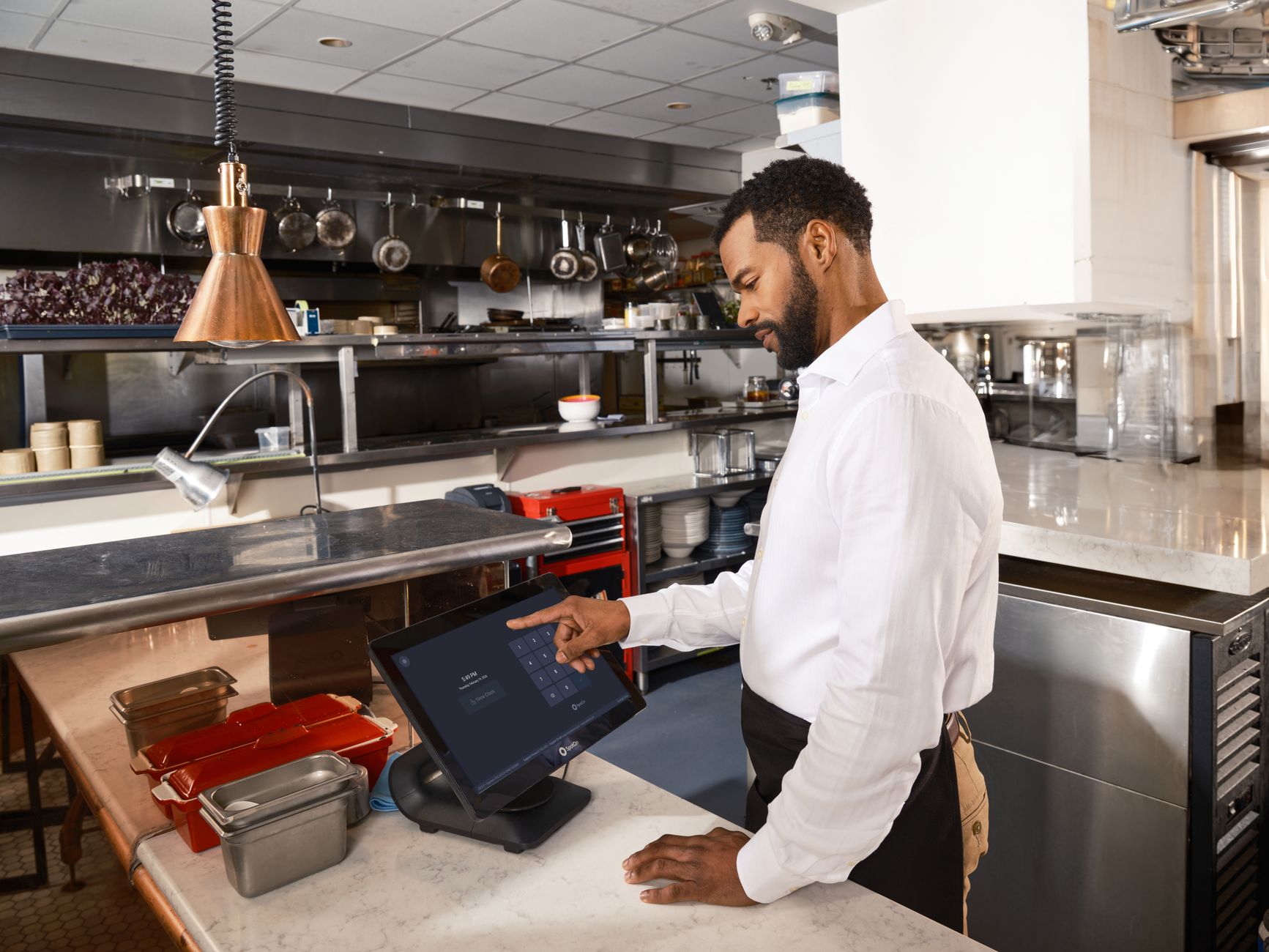
There are several products in this space, and they're not all built the same way. Here's a clear-eyed look at the main options.
Slang.ai
Slang.ai is built specifically for restaurants. It handles phone reservations, common guest enquiries and can integrate with reservation management platforms. Public pricing is around $399 per location per month. If you run a single site with consistent call volume, that's the cleaner option — no per-minute surprises on your bill.
Kea
Kea focuses on voice AI for phone ordering and reservations, with POS integrations. It's better suited to higher-volume operations where phone ordering is part of the model alongside reservations. Publicly cited pricing is around $450 per month flat. The POS integration is the differentiator here — if you want the booking or order to land directly in your system without a manual step, Kea is worth looking at.
Retell AI
Retell AI is a more general voice-agent platform that you (or a developer or AI builder) configure to match your restaurant's specific needs. Pricing is per minute — roughly $0.07 to $0.31 per minute depending on the configuration. That model suits restaurants with lower or unpredictable call volumes where a flat monthly fee would be harder to justify. The trade-off is that it takes more setup work to get right.
RingCentral AI Receptionist
RingCentral's AI Receptionist is a business phone add-on rather than a restaurant-native product. It can handle inbound calls and route or answer standard questions, but it doesn't come with hospitality-specific logic out of the box. Pricing is cited at around $39 to $69 per month on top of a phone plan. It makes sense if you're already a RingCentral customer and want to add AI answering incrementally.
The right choice depends on two things: your monthly call volume (which determines whether per-minute or flat-fee pricing costs more) and how tightly you need it to connect with your existing reservation or POS system.
Common Mistakes Restaurant Owners Make When Setting This Up
Voice AI for restaurant reservations is still in early adoption among operators, which means there's a lot of trial and error in the market. Here are the mistakes that come up most often.
Assuming the AI just takes a message
Early voicebot systems took messages. Current AI receptionist tools can qualify the caller, check availability, confirm a booking, and send a follow-up — all without a human in the loop. If you've looked at this space before and dismissed it, the product category has moved on.
Treating it as a replacement for your front-of-house team
The practical use case is overflow and after-hours coverage, not replacing the people on your floor. When a guest calls with a complex complaint, a special event request or a nuanced allergy question, the AI should escalate to a human. The best deployments use AI to absorb the routine majority of calls and free up staff for the interactions that genuinely need a person.
Not accounting for the real pricing structure
Some tools bill per minute, some per location, and some require a separate phone plan. A restaurant getting 300 calls a month with an average call length of 3 minutes pays very differently under a per-minute model versus a flat $399/month fee. Run the numbers against your actual call data before signing up.
Skipping the training and testing phase
Your AI receptionist needs to know your menu, your hours, your reservation policy, your private dining options and your standard responses to common questions. That information has to be entered, tested and refined before you go live. Restaurants that skip this step end up with an AI that gives wrong information — which is worse than no AI at all.
How to Get Your AI Receptionist Live Without Disrupting Your Team
This doesn't need to be a long project. A realistic timeline for a single-site restaurant is one to three weeks from tool selection to live calls. Here's how to structure it.
Step 1 — Document your call patterns
Before you pick a tool, know your call volume. Check your phone system or ask your team: how many calls do you receive on a typical Friday? What percentage are booking requests versus general enquiries? What time of day are most calls missed? This tells you whether a flat-fee or per-minute model is cheaper, and which hours need coverage most.
Step 2 — Choose the right tool for your reservation system
If you use a reservation platform like OpenTable, Resy or SevenRooms, check which AI tools integrate with it directly. A tool that can check and write to your reservation system in real time is worth more than one that just captures a name and number for your team to process manually.
Step 3 — Build your knowledge base
Write out the answers to every question your AI will need to handle: opening hours, address, parking, accessibility, menu highlights, dietary options, group booking policy, cancellation policy. This becomes the script and knowledge base your AI uses to answer calls accurately.
Step 4 — Run it in parallel first
For the first week, set the AI to handle after-hours calls only, while your team continues taking calls during service. This lets you test the system without risk. Listen to the call recordings, check the bookings it captures, and adjust the responses before you switch it on for peak hours.
Step 5 — Roll out peak-hour coverage and monitor
Once you're confident in the responses, extend coverage to your busiest periods. Operators who deploy AI answering consistently report that their host staff spend noticeably less time on the phone during service — that time goes back to the floor where it belongs. Monitor weekly: check call answer rates, booking accuracy and any calls the AI escalated to a human to see where the system needs adjustment.
Conclusion
An AI receptionist for restaurants isn't a technology project — it's an operational fix for a concrete problem. If a meaningful share of your calls during peak hours go unanswered, you're losing bookings every single week. A system that answers calls consistently, captures reservations accurately, and sends automated reminders to reduce no-shows pays for itself quickly. The tools exist, the pricing is manageable for most single-site restaurants, and the setup is measured in weeks, not months.
The practical starting point is simple: look at how many calls you're missing right now, pick a tool that connects to your reservation system, and go live on after-hours coverage first. The rest follows from there.
Want to go further? Join the Skool group (200+ entrepreneurs) and the AI builders' Discord → Join the community
Running a business and want to automate your content or processes with AI? → Book a call
FAQ
How does an AI receptionist handle restaurant reservations?
The AI answers incoming calls automatically, asks the caller for their preferred date, time and party size, checks availability against your reservation system, confirms the booking in real time, and sends a confirmation message by SMS or email. It handles the full booking flow without putting the customer on hold or sending them to voicemail.
Can an AI receptionist replace my front-of-house staff?
No, and it shouldn't try to. The practical use case is absorbing peak-hour overflow and after-hours calls — the routine booking requests and standard questions that currently go unanswered when your team is on the floor. Complex or sensitive situations should always escalate to a human member of staff.
How much does an AI receptionist for a restaurant cost?
It depends on the tool and pricing model. Restaurant-specific platforms like Slang.ai are priced at around $399 per location per month, while Kea is around $450 per month flat. General voice-agent platforms like Retell AI bill per minute at roughly $0.07 to $0.31 per minute. The right choice depends on your call volume — run the numbers against your actual monthly calls before committing.
How many restaurant calls typically go unanswered during busy periods?
A significant proportion of inbound calls go unanswered during peak service hours, because front-of-house staff are managing tables and guests at the same time. Most callers who can't get through simply call another restaurant rather than leaving a message.
Can AI reminders really reduce no-shows at a restaurant?
Yes, meaningfully. Automated confirmation messages and pre-visit reminders — sent by SMS or email after a booking is made — reduce no-shows by addressing the most common cause: guests simply forgetting they made a reservation. The improvement comes from simple, timely communication rather than any complex technology.
How long does it take to set up an AI receptionist for a restaurant?
For a single-site restaurant, a realistic timeline is one to three weeks from tool selection to live calls. The main work is building the knowledge base — your hours, menu details, booking policy, common questions — and testing the system on after-hours calls before extending it to peak periods.
Which AI receptionist tools work best for restaurants?
Restaurant-specific tools like Slang.ai and Kea are built for this use case and offer integrations with reservation and POS systems. General platforms like Retell AI can be configured for restaurants but require more setup. The key factor is whether the tool connects directly to your existing reservation system so bookings land there automatically.
On voit si l'IA peut faire cartonner votre business ?
15 minutes, cash. Pas de script, pas de jargon. Au pire, on vous dit que ce serait un flop — et vous aurez gagné du temps.